

Range of accessories to enrich your living environment with enhanced user control
KNOW MORE
Powering AI and Cloud Computing

Range of accessories to enrich your living environment with enhanced IoT - based user


How the physical connectivity layer inside AI data centres is being redesigned for density, performance and serviceability.

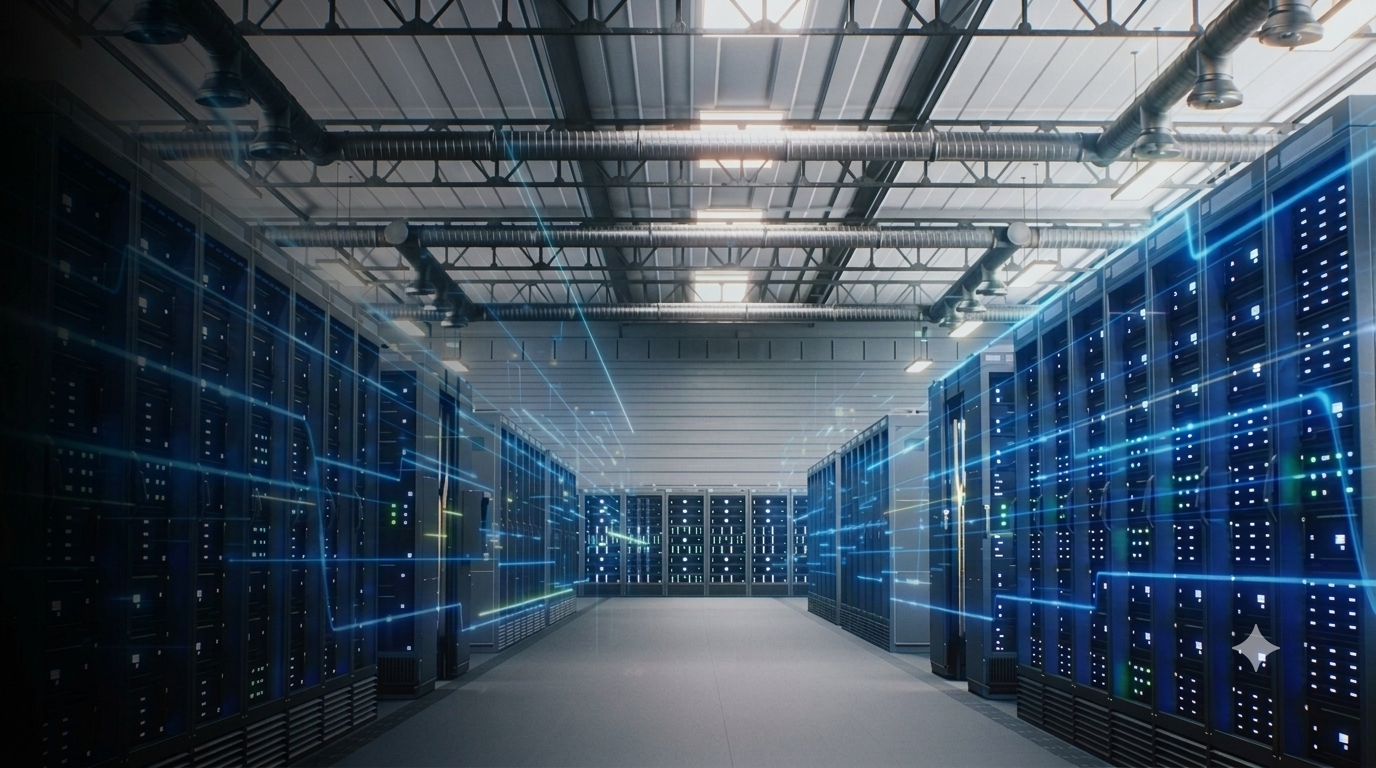
AI data center connectivity infrastructure is being fundamentally rewritten. Enterprise cabling was planned for stable networking with predictable traffic and long refresh cycles. AI clusters generate east-west traffic at densities and speeds that require a different physical layer. This blog looks at what AI actually changes about connectivity planning, why link-loss budgets and channel serviceability matter as much as raw speed, where copper continues to fit, and how Legrand's LCS3, fibre and copper connectivity, patching, Cablofil and cable management ecosystems support the shift.
Something has shifted in how AI data centres are being wired. For most of the last two decades, enterprise cabling followed a fairly stable playbook. Networks were predictable, refresh cycles were long, and once the physical layer was installed, it was expected to remain largely untouched.
AI clusters have changed that pattern.
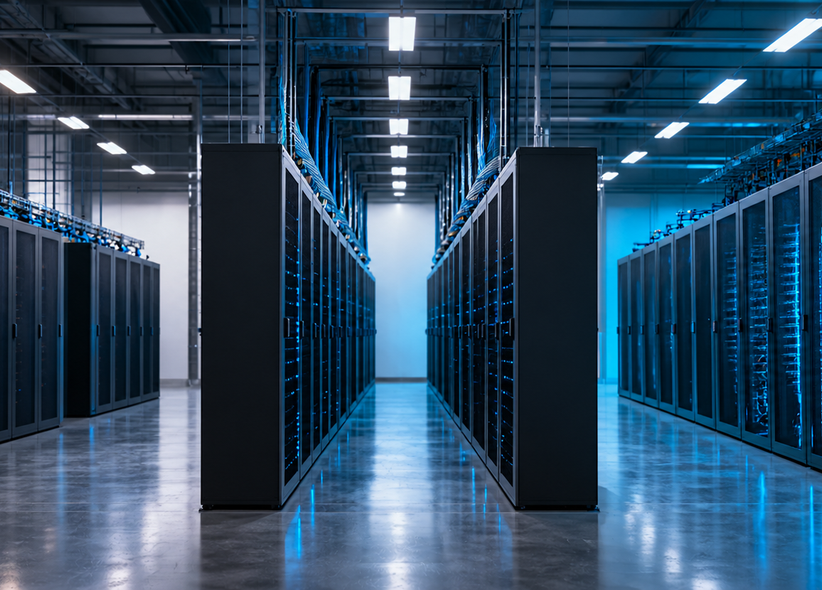
Training clusters generate high-volume east-west traffic between GPUs at very high speeds. Switch and port densities have increased sharply. Expansion and upgrade cycles have accelerated. And the physical layer now has to remain accessible and identifiable as density grows, because reconfiguration cycles happen far more often than they did in a conventional enterprise deployment.
Our earlier blogs in this series looked at how the different layers of the AI data centre are being redesigned. Power Train tackled the grid-to-compute architecture. Cooling Intelligence covered thermal management as a connected system. The White Space Rebuild examined how racks, containment and rack-level intelligence come together on the operational floor. This blog is about the physical connectivity layer that carries data between them, and how Legrand's connectivity ecosystem is engineered for that shift.
AI infrastructure introduces five specific pressures on connectivity planning that traditional enterprise networks did not create.
First, higher east-west traffic. AI training and inference generate large volumes of server-to-server traffic across the cluster, not just north-south traffic to and from users. The physical layer has to support this pattern at scale, and it has to do so without introducing latency or bottleneck points.
Second, greater switch and port density. A single AI training rack can carry hundreds of high-speed network connections between GPUs and top-of-rack switches. Across a large cluster, the port count runs into tens of thousands. Structured cabling designed for lower-density enterprise networking cannot support this scale without redesign.
Third, faster expansion and upgrade cycles. AI infrastructure evolves quickly. New generations of GPU come online. Cluster sizes grow. Speeds step up from 400 Gb/s to 800 Gb/s, and roadmaps are extending towards 1.6 Tb/s. The physical layer has to accommodate these upgrade cycles without requiring architectural rework each time.
Fourth, faster deployment. Time to compute is a commercial priority in AI infrastructure. The connectivity layer has to be deployable at the pace the rest of the build demands. Pre-terminated components, factory-tested channels and cabling systems designed for rapid installation are becoming standard requirements, not optional efficiencies.
Fifth, maintaining accessibility as density increases. When port counts and cable volumes grow, the risk is that the physical layer becomes harder to work on. Modern AI-ready connectivity is planned so that identification, labelling and pathway access hold up as the deployment scales.
Together, these five pressures mean the physical connectivity layer needs to be treated as an architectural decision from the outset.
The most important shift at higher speeds is not simply choosing fibre over copper. It is ensuring that the complete channel can meet its optical loss budget while remaining accessible, identifiable and serviceable at density.
As lane rates and channel architectures evolve, managing optical margin becomes more critical. The available loss budget depends on the selected transceiver, fibre type, reach and number of connection points. The complete channel must therefore be designed against the relevant optical specification. At 100 Gb/s a channel could absorb comparatively generous cumulative loss across connectors, patch panels and splices. At 400 Gb/s and 800 Gb/s the tolerance narrows sharply. Each connection point contributes measurable loss, and the design has to account for cumulative loss across the full end-to-end channel, not just the raw fibre. When the budget is exceeded, links fail intermittently or degrade in ways that are difficult to diagnose after the fact.
This changes how fibre infrastructure is specified. Multimode fibre continues to serve many in-rack and inter-rack applications where reach is short and cost matters. Single-mode fibre becomes the choice where longer reaches or higher-speed roadmaps are involved. Connector formats such as LC and MPO/MTP are selected according to port density, optical loss characteristics and channel design, not treated as interchangeable. And migration between fibre types or connector formats is not automatic. It involves architectural planning, not just component substitution.

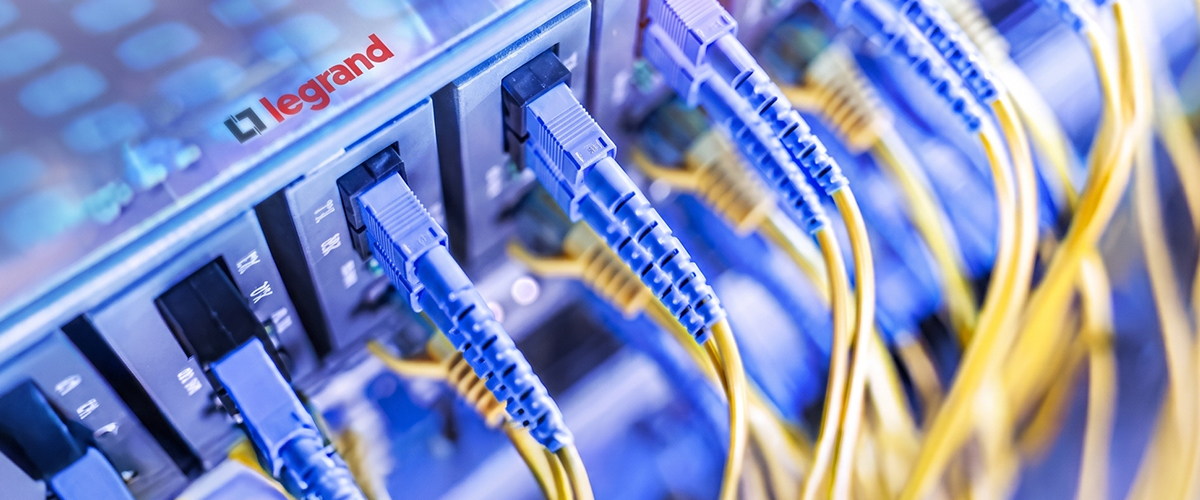
Legrand's fibre portfolio is designed on this understanding. LCS3 Structured Cabling anchors the framework, engineered for tight loss performance across the full channel with pre-terminated trunk assemblies that are factory-tested to specified loss budgets. Alongside it, the Infinium fibre optic system is purpose-built for the loss-critical environments AI clusters create. Infinium Core, with a single-mode channel loss of 0.49 dB, is designed for AI, hyperscale, cloud and supercomputing deployments where every fraction of a decibel of optical margin counts. The full Infinium range enclosures, cassettes, trunks, patch cords and adapter panels — is engineered as one platform, so operators can migrate through upgrade cycles by swapping components within the same enclosure system rather than rebuilding the underlying framework. High-density MPO/MTP cassette systems support the port counts AI clusters generate, with enclosure formats accommodating up to 96 LC fibres in 1U for space-constrained deployments.
The point is not fibre in isolation. It is a complete channel that performs as specified at density, and that remains serviceable across upgrade cycles.
Copper has a clear role in AI infrastructure. That role has become more specialised, but it remains important.
Modern AI clusters use a combination of copper physical media according to reach and application. High-speed direct attach cables and active electrical cables are widely used for very short-reach connections inside the rack, including in some current rack-scale GPU architectures where these connections handle server-to-switch and switch-to-switch links at very high speeds. Category 6A structured copper cabling continues to serve enterprise applications and management networks that do not require the higher speeds of the AI fabric. Category 8 structured copper is engineered specifically for shorter-reach, higher-speed data centre applications where structured cabling is preferred over point-to-point cabling.
Each of these copper media has a distinct purpose. High-speed DAC and AEC connections serve the in-rack high-speed fabric. Category 8 structured copper supports shorter-reach data centre links where structured cabling brings management and serviceability advantages. Category 6A serves out-of-band management, administrative networks, iDRAC and BMC connections, and enterprise workloads that run alongside AI clusters inside the same facility.
Legrand's copper connectivity portfolio is engineered for this segmented reality. Category 6A shielded solutions support enterprise and management applications. Category 8 structured cabling is available for shorter-reach data centre requirements where its performance characteristics fit. Termination hardware is designed to integrate cleanly with the fibre and pathway layers, so the copper and fibre systems operate as one physical infrastructure rather than two disconnected ones.
The role of copper has been sharpened. It has not been removed.
Density is one part of the challenge. Serviceability is the other.
A patch environment with several thousand fibre and copper terminations is only valuable if it can be worked on. Identification, labelling, pathway access and termination hardware quality all decide whether reconfiguration cycles are efficient or costly. In AI infrastructure, where expansion and upgrade cycles are faster than in conventional enterprise deployments, serviceability becomes a design requirement rather than an operational afterthought.
AI-ready patching is planned at the design stage. Patch panels are specified for the port densities the deployment actually needs. Clear labelling, colour coding and physical layout are engineered so that operators can identify and reach the correct connection quickly, even under sustained density. Termination hardware is designed for consistent, repeatable field work. Vertical and horizontal cable managers are integrated into the patching environment so that additions and changes do not disturb adjacent runs.
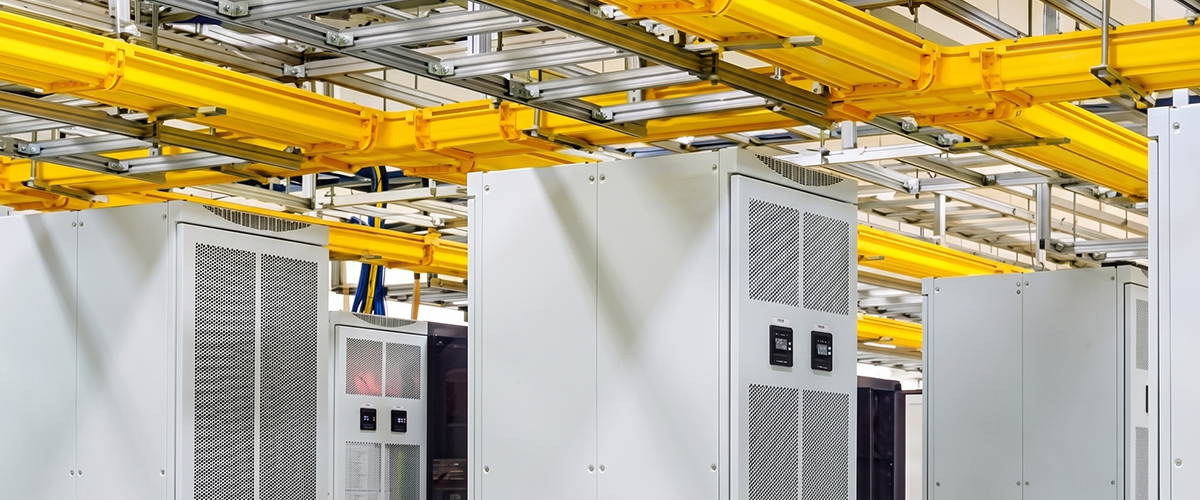
Pathway design carries the same logic. Overhead cable pathways in AI deployments handle greater cable volumes than conventional enterprise networks generate. Load capacity, thermal performance and access all matter. Cablofil wire mesh cable tray systems are engineered for this scale. The open-mesh construction provides natural ventilation, so cable heat dissipates through the tray rather than accumulating inside it. Load capacities support the higher cable volumes AI deployments generate. And the open construction allows cable additions and changes to happen without dismantling the tray or disturbing adjacent runs.

Around the pathway, high-density cable management accessories complete the architecture. Vertical managers between rack rows, horizontal managers inside the patching environment, and grommet-and-brush systems where cables transition between pathway and rack all work together to keep the physical layer organised as the deployment evolves.
The connectivity layer is only as good as its capacity to be worked on, year after year.
Structured cabling, fibre, copper, patching, pathways and cable management are engineered together in the Legrand connectivity portfolio. LCS3 anchors the structured cabling framework, with the Infinium fibre optic system providing the loss-critical high-performance fibre layer for AI and hyperscale environments. Copper connectivity works within that same framework as a complementary component, sized to its appropriate short-reach applications. Patch panels and connectivity hardware sit at the operational interface where density becomes manageable. Cablofil wire mesh cable trays carry the physical layer across the hall. And high-density cable management accessories keep the whole system organised through years of expansion and upgrade cycles.

When these components are procured separately from different sources, integration risk sits with the operator. Fibre cassettes that do not fit standard patch panel form factors. Copper terminations that require different tools than the fibre platform. Cable trays that do not align with rack chassis. Each mismatch adds hours to deployment and cost to operation. Sourcing the connectivity ecosystem as one integrated architecture eliminates these interface risks. Components fit together as intended. Upgrades come from one product family with consistent specifications. And single-point accountability means one support relationship across the physical layer.
For a long time, connectivity was treated as a background layer inside the data centre. In AI infrastructure, it is a strategic asset. It decides whether workloads can scale, whether expansion cycles can be delivered on schedule, whether the physical layer can absorb the
next generation of AI without rework. Planned as an integrated architecture at the outset, it enables everything downstream. Left as a collection of components procured separately, it becomes a limiting factor.
Discover how Legrand's integrated connectivity architecture is powering AI-ready data centre deployments across India.
What is AI data center connectivity infrastructure?
AI data center connectivity infrastructure is the physical layer of structured cabling, fibre and copper connectivity, patching hardware, cable pathways and cable management engineered to support AI workloads. It handles the higher east-west traffic, greater port densities and faster upgrade cycles that AI clusters demand, and it supports channels operating at 400 Gb/s, 800 Gb/s and beyond.
Why is optical loss budget important in AI data centre connectivity?
Optical loss budgets shrink as data rates rise. At 400 Gb/s and 800 Gb/s, the tolerance for cumulative loss across connectors, patch panels and splices narrows sharply. The full channel has to be designed and specified to meet its loss budget, or links fail intermittently. This makes complete channel design more important than raw fibre selection.
What is Legrand's fibre connectivity portfolio for AI data centres?
Legrand's fibre connectivity portfolio combines LCS3 Structured Cabling with the Infinium fibre optic system. LCS3 provides the structured cabling framework across fibre and copper. Infinium is purpose-built for loss-critical environments, with Infinium Core delivering a single-mode channel loss of 0.49 dB for AI, hyperscale, cloud and supercomputing deployments where optical margin matters most.
What is LCS3 Structured Cabling System?
LCS3 is Legrand's structured cabling system engineered for enterprise and AI-ready data centre deployments. It supports both fibre and copper components within a common framework, uses pre-terminated trunk assemblies that are factory-tested to specified loss budgets, and accommodates multiple upgrade paths without forcing operators to rebuild the underlying pathway or termination framework.
Where does copper still fit in AI data centre infrastructure?
Copper has a specialised but important role. High-speed DAC and AEC connections serve very short-reach in-rack links, including some current rack-scale GPU architectures. Category 8 structured copper supports shorter-reach data centre applications. Category 6A serves management networks, administrative connections and enterprise workloads that run alongside AI clusters.
What is Cablofil used for in AI data centres?
Cablofil is a wire mesh cable tray system used for overhead cable pathways in data centres. In AI deployments it carries greater cable volumes, dissipates cable heat through the open-mesh design, and allows cable additions and changes without dismantling. This makes it suited to the expansion and upgrade cycles AI workloads demand from the physical layer.
Why is serviceability important in AI connectivity infrastructure?
Serviceability matters because AI clusters generate thousands of terminations that are worked on frequently. Identification, labelling, pathway access and termination hardware all decide whether reconfiguration cycles stay efficient. When serviceability is designed in at the outset, density remains manageable across the life of the deployment.

Smart Switches from Living now, Myrius, Arteor Advance: The New Standard for Modern Homes
READ SMART SPACE
Wired vs. Wireless: Choosing the Best Home Automation System in India for New Construction
READ SMART SPACE


















 Eliot
Eliot LDCS
LDCS




 Residential
 Commercial
 Hospitality
 Industrials







 Data Center Solutions
 Hyperscale data centers